

Pet Allergy Clinic London
Expert diagnosis and treatment for cat, dog and other animal allergies in adults and children.
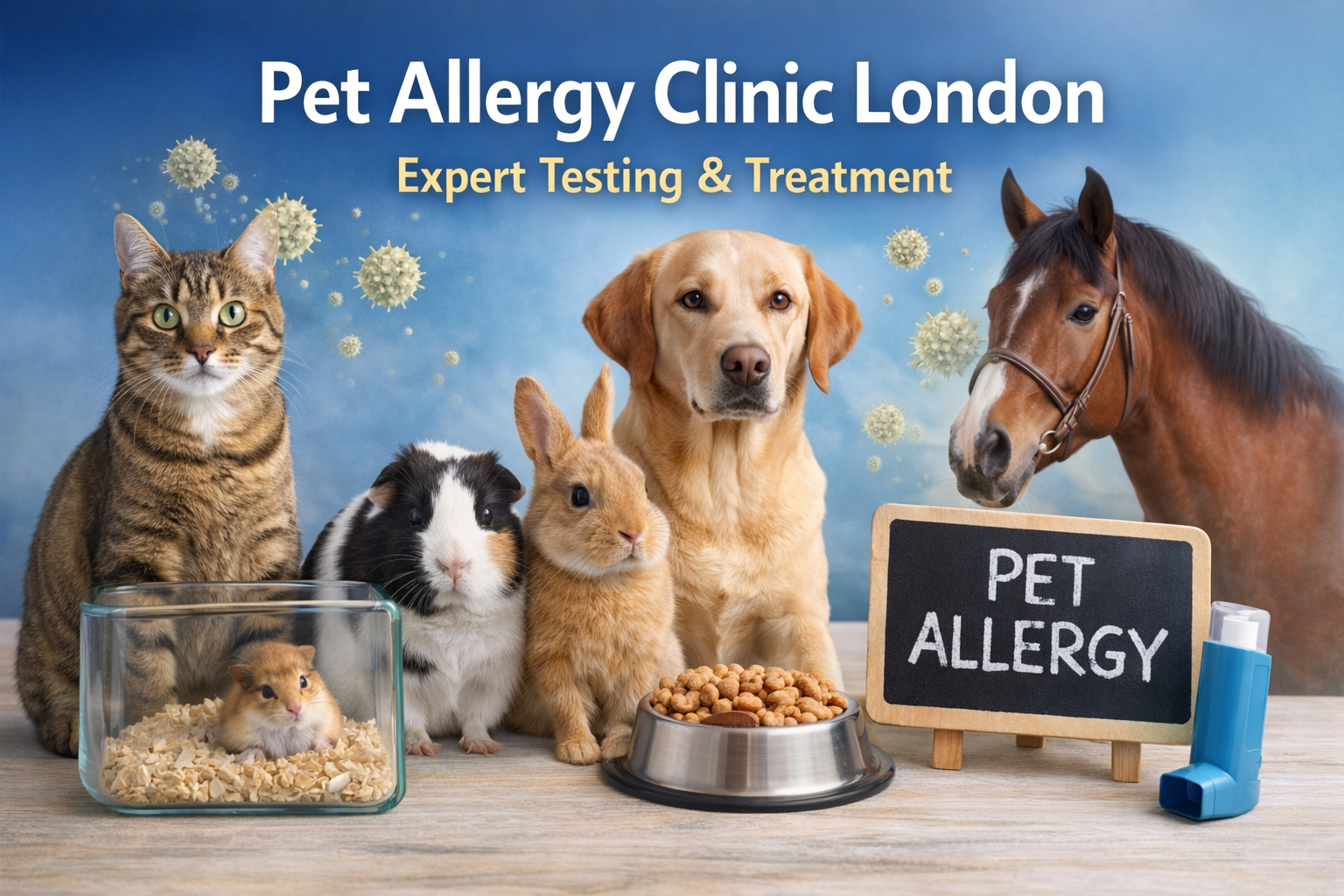
Common pet allergy including cats, dogs and small animals assessed at the London Allergy and Immunology Centre.
Pet allergy can affect the nose, eyes, skin and lungs, and symptoms may continue even when an animal is not in the room. Our allergy specialists provide a careful assessment of suspected pet allergy, identify the most likely trigger, and create a personalised management plan to help you feel better and breathe more easily.
What is pet allergy?
Pet allergy is an allergic reaction to proteins produced by animals. These proteins are commonly found in dander, saliva and urine rather than in the fur itself. Cats and dogs are the most frequent triggers, but symptoms can also be caused by horses, rabbits, guinea pigs, hamsters and other furry animals. Pet allergens are light, sticky and easily carried on clothing, furniture and soft furnishings, so exposure can happen even in places where no pet lives.
Many people assume they are reacting to pet hair, but hair mainly acts as a carrier for allergenic proteins. This is why so-called hypoallergenic breeds do not reliably prevent allergic reactions. Some people may react more strongly to one animal than another, and molecular or component-based testing can sometimes help clarify the pattern of sensitisation.
Common pet allergy symptoms
Pet allergy often causes symptoms of allergic rhinitis and conjunctivitis. Typical features include sneezing, a blocked or runny nose, itchy nose, itchy or watery eyes, post-nasal drip, throat irritation and disturbed sleep. Some people also experience facial pressure, repeated sinus problems or worsening symptoms indoors.
In patients with asthma, pet allergens may trigger cough, wheeze, chest tightness or shortness of breath. Skin symptoms can also occur, particularly after direct contact, including itching, hives or flare-ups of eczema. Children may present with persistent nasal symptoms, recurrent cough, poor sleep or difficulty during exercise and play.
When to seek specialist advice
Arrange an allergy review if you have:
- Ongoing nasal or eye symptoms around animals
- Cough, wheeze or asthma worsened by pets
- Unclear triggers at home, work or school
- Eczema or hives after animal contact
- Symptoms despite antihistamines or nasal sprays
- Concerns about keeping or acquiring a pet
Which animals most often cause allergy?
Cats are a very common cause of pet allergy because their allergens are highly airborne and persistent in the indoor environment. Dog allergy is also common, although diagnosis can be more complex because dogs produce multiple allergenic proteins and cross-reactivity with other furry animals can occur. Small mammals such as rabbits, guinea pigs and hamsters may also trigger significant symptoms, especially in enclosed indoor spaces. Horse allergy is another important cause in people who ride, work with animals or visit stables.
The severity of symptoms does not always match the amount of visible shedding. Short-haired and long-haired animals can both provoke reactions, and a clean-looking home may still contain substantial allergen reservoirs in carpets, bedding, upholstery and clothing.
How we diagnose pet allergy
Accurate diagnosis starts with a detailed clinical history. Your consultant will ask which animals trigger symptoms, how quickly symptoms appear, whether reactions occur by touch or simply by entering a room, and whether asthma, eczema or sinus symptoms are also present. We also consider whether allergens may be carried into the environment on clothing or shared indoor air.
Testing may include skin prick testing and blood tests for specific IgE antibodies to cat, dog or other animal allergens. In selected cases, more detailed component-resolved allergy testing may help refine the diagnosis by identifying the exact animal proteins involved and assessing possible cross-reactivity. Test results are always interpreted together with the history, because sensitisation on a test alone does not always mean clinically relevant allergy.
Pet allergy treatment
Treatment depends on the severity of your symptoms, whether asthma is involved, and how easy it is to reduce exposure. For many patients, the most effective first step is to lower allergen exposure as much as realistically possible. We then combine this with medicines and a long-term management plan.
Medical treatment may include non-sedating antihistamines, nasal corticosteroid sprays, eye drops and inhalers where asthma symptoms are present. Patients with persistent or more troublesome symptoms may benefit from specialist review for allergen immunotherapy. This can be particularly relevant for selected respiratory allergy cases when symptoms remain significant despite standard treatment and avoidance measures.
Avoidance strategies
Reducing exposure can make a major difference. Measures may include keeping pets out of the bedroom, using high-efficiency filtration where appropriate, improving cleaning routines, reducing soft furnishings that trap allergen, and washing hands and clothing after close contact.
Medicines
Treatment may include antihistamines for sneezing and itching, nasal steroid sprays for congestion and inflammation, eye drops for conjunctivitis, and inhaled treatment when pet exposure contributes to asthma symptoms.
Immunotherapy advice
For selected patients, allergen immunotherapy may be considered as a disease-modifying option. Suitability depends on the clinical history, testing pattern, symptom burden and the specific allergen involved.
Can you keep your pet if you have pet allergy?
This is one of the most important and sensitive questions in allergy care. The answer depends on how severe the symptoms are, whether asthma is affected, which animal is involved, and whether symptoms improve with treatment and environmental control. In mild cases, careful allergen reduction and appropriate medication may be enough. In moderate or severe cases, particularly where asthma is worsened, ongoing exposure may remain a significant health problem.
Our role is to give clear, honest and personalised advice. We focus on symptom control, long-term respiratory health and practical solutions for your home life rather than one-size-fits-all recommendations.
Pet allergy in children
Children with pet allergy may have sneezing, a constantly blocked nose, itchy eyes, eczema flare-ups or wheeze. Sometimes symptoms are mistaken for repeated colds. Persistent allergic inflammation may affect sleep, concentration, sports and school attendance. Early diagnosis can help families understand the trigger, improve the child’s daily comfort and reduce avoidable asthma exacerbations.
We provide child-friendly, consultant-led assessments and practical family advice on managing pet allergen exposure at home, in school settings and when visiting relatives or friends who keep animals.
Frequently asked questions about pet allergy
Are hypoallergenic pets really hypoallergenic?
No breed can be guaranteed allergy-free. Allergic reactions are caused by proteins from the animal, not simply by the amount of fur. Some people may tolerate one animal better than another, but there is no universally hypoallergenic cat or dog.
Can pet allergy cause asthma?
Yes. Pet allergens can worsen existing asthma and may trigger wheeze, cough, chest tightness and breathlessness in sensitised individuals. This is why persistent respiratory symptoms around animals should be properly assessed.
How do you test for pet allergy?
Diagnosis may involve a detailed symptom history, skin prick testing and blood testing for specific IgE antibodies. In selected cases, component-resolved testing helps refine the result and guide advice more precisely.
Is immunotherapy available for pet allergy?
Immunotherapy may be considered for selected patients, particularly where respiratory symptoms remain important despite sensible allergen reduction and standard medication. Suitability should be assessed by an allergy specialist.
Can symptoms continue even when the pet is not present?
Yes. Pet allergens can remain in the indoor environment for long periods and may also be carried on clothes, furniture and soft furnishings. This is why symptoms can continue even after the animal has left the room.
Book a pet allergy assessment
If you or your child have troublesome symptoms around cats, dogs or other animals, our clinic can help. We offer expert assessment, appropriate testing and tailored treatment plans to improve day-to-day quality of life.
A specialist diagnosis can help you understand whether symptoms are truly due to pet allergy, whether asthma needs attention, and which treatment options are most likely to work for you.